You want picks now, but what counts as “better”
Most subscriptions promise “better picks,” but that only helps if “better” matches what you’re actually trying to do this month. If the goal is to feel confident placing a trade by Friday, speed and clarity matter more than a perfect long-term story. If the goal is to hold through ugly quarters, “better” might mean fewer ideas, more patience, and a plan for when the stock drops 25% right after you buy.
The awkward part is that a track record can look strong and still be useless for your situation. A service can win on paper while pushing you into too many positions, too quickly, with alerts you don’t have time to follow. Or it can be “right” over five years while you bail in month three because the drawdown feels like a mistake.
Before comparing logos and promo returns, pick your constraint: time, stomach, or cash. Then “better” becomes measurable.
Two philosophies: ranking engines versus narrative conviction

Once the constraint is clear, the split between Zacks and Motley Fool starts to look less like “who’s smarter” and more like “what kind of machine do I want to follow.” Zacks tends to feel like a ranking engine: lots of coverage, frequent changes, and a sense that the list is reacting to new earnings revisions and estimate shifts. That can help when timing matters, but it also creates a subtle tax and attention bill if you’re in a taxable account or you don’t want to revisit positions every week.
Motley Fool is usually closer to narrative conviction: fewer ideas, more “here’s why this business wins over years,” and more tolerance for looking wrong for a while. The friction shows up differently—less churn, but more emotional load when a pick drops 20–30% and the only real instruction is to keep holding (or add) unless the thesis breaks.
Neither style is automatically safer. The practical question is whether your process can absorb frequent signals without overtrading, or whether you can sit still through drawdowns without rewriting the plan mid-quarter.
Pricing feels simple until you hit the upgrades
The first-year promo price is the easy part. The real cost shows up once the “core” subscription starts implying you’re missing the good stuff: a higher tier for more timely alerts, a separate product for options, a bundle for “top” ideas, a screen locked behind another paywall. That’s when the service stops being a single line item and starts behaving like a stack of tools you didn’t plan to manage.
Zacks-style products tend to tempt upgrades through coverage and frequency—more lists, more signals, more ways to filter—so the pressure is “pay more to narrow the firehose.” Motley Fool-style products tend to tempt upgrades through exclusivity—additional services framed as higher-conviction or earlier access—so the pressure is “pay more to get the best picks.”
The constraint is usually cash flow and regret, not affordability. If the renewal hits at full price right after a rough quarter, people cancel mid-process, then chase the next promo elsewhere.
Workflow friction: alerts, screens, and decision load
That mid-process cancellation usually has less to do with the picks and more to do with the daily “handling” cost. Zacks can create a steady drip of activity—rating changes, screens, fresh lists—and the friction is deciding what counts as action versus noise when you’ve got a job, a watchlist, and maybe two short windows a week to trade.
In practice, the decision load shows up as micro-choices: do you rotate because a rank slipped, do you wait for earnings, do you cap position size because you’re already at 12 names? If you’re in a taxable account, every “small” swap starts implying short-term gains, wash-sale mistakes, or a spreadsheet you didn’t plan to keep.
Motley Fool tends to be quieter, but the screen-time shifts to rereading updates and checking thesis drift. Fewer alerts can still be demanding when a holding breaks down and there isn’t a clean “sell” signal—just a judgment call you have to own.
Volatility and regret: when good picks feel bad
Once money is actually in the market, the “handling” cost turns into something sharper: a drawdown that lands right after you followed a recommendation. A stock can be a solid long-term business and still punish timing, and the regret shows up as process edits—shrinking position sizes mid-stream, skipping the next alert, or selling just to stop watching the red. The constraint here is usually emotional bandwidth, not ideology.
Zacks-style signals can reduce that regret if you treat them like risk management: a rank drop is permission to exit and move on. But if you can’t trade promptly—earnings week, travel, a two-day settlement window, or a taxable account where short-term gains matter—you end up holding a “sell” you didn’t sell, then blaming the service when the loss widens.
Motley Fool’s approach flips the regret. The drawdown is often framed as expected volatility, which is workable if you sized the position assuming a 30% hit and a multi-year holding period. If you didn’t, “just hold (or add)” becomes an averaging-down decision you may not have cash for, and the pain turns into thesis shopping.
Timing problems: buy windows, rebalancing, and taxes
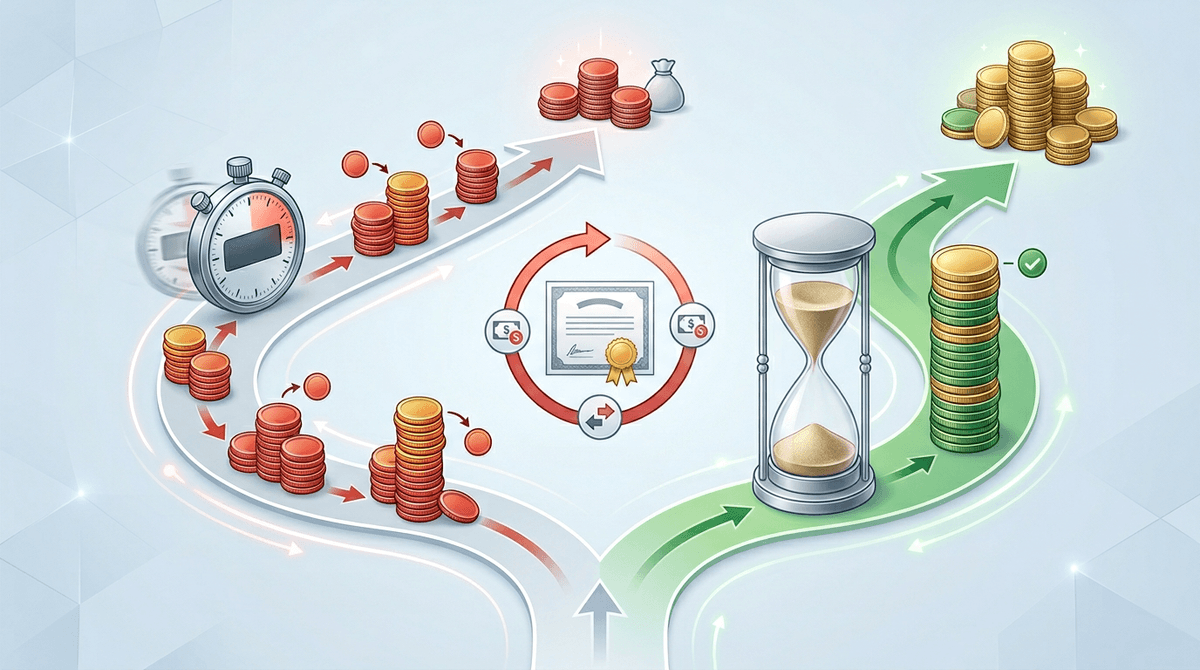
Then timing becomes the quiet thing that makes a “good” recommendation unusable. Alerts land when you’re in meetings, the stock gaps up on earnings, or your cash is still settling. If you can only place trades twice a month, a short buy window effectively turns into “miss it or chase it.”
Zacks-style lists can force that issue because the signal changes are part of the product. If you don’t rebalance when ranks shift, you slowly stop following the system. If you do rebalance, the friction is real: partial fills, slippage, and a growing pile of small lots that are annoying to unwind.
Taxes are where the math stops being theoretical. Frequent swaps in a taxable account can pull gains into short-term rates, and selling losers to “reset” can run straight into wash-sale mistakes if you re-enter too soon. Fool’s slower cadence usually lowers that churn, but it pushes a different constraint: capital gets tied up longer, and trimming becomes your job when a position outgrows the rest.
Partial resolution: match service to your constraints
At this point the “right” subscription is mostly the one that doesn’t force you to break your own rules under stress. If you can’t monitor signals, trade during the day, or tolerate turnover in a taxable account, a fast-moving ranking product becomes expensive in slippage, short-term gains, and missed exits. If you don’t have the cash (or patience) to hold through a 20–30% drawdown, a conviction newsletter turns into panic-selling with extra steps.
One clean way to decide is to set operating limits before you pay: max new positions per month, target holding period, and a position-size cap that assumes volatility. Then look at the service’s cadence and upgrade pressure and ask whether you’ll actually follow it at full renewal price, not promo price.
If your limits don’t match either style, the partial resolution is skipping both and using a cheap screener plus an index core until your process is stable enough to absorb outside picks.