Pain after knee replacement isn’t one straight line
Some mornings the knee feels almost manageable, and then by late afternoon it can throb and tighten like you’ve “undone” something. That up-and-down pattern is frustrating, especially when you’re trying to judge whether you’re improving or sliding backward.
After a knee replacement, pain often changes in waves because several things are happening at once. The tissues are still reacting to surgical trauma, which can keep inflammation running in the background. On top of that, fluid builds in and around the joint, and that swelling raises pressure, limits bend, and can make the area feel more sensitive to normal movement. Even sleep can feel inconsistent because stiffness and pressure tend to announce themselves when you’re finally still.
Then activity gets layered in: a therapy session, a longer walk through the house, a busy day on your feet. That extra load may not harm anything, but it can irritate already reactive tissue and make the next 12–24 hours feel louder than expected.
What drives pain beneath the surface post-surgery
It can be confusing when the knee feels warm and “full” even while you’re resting, like it’s working on something you can’t see. That sensation often reflects a normal recovery load: the incision, deeper soft tissue, and bone surfaces are still settling after being cut, moved, and closed, and the nervous system tends to keep the area on higher alert for a while.
In the early weeks, inflammation isn’t just a simple “on/off” switch. Fluid shifts into the tissues as part of healing, and that extra volume can raise pressure inside and around the joint. Pressure can make bending feel tighter and can turn a small movement into a sharper signal, especially when the knee has been still and the tissue fluid has pooled.
At the same time, pain can feel inconsistent because the system is learning what’s safe again. If the knee has been protected for months or years before surgery, the brain can interpret stretch or load as more threatening than it truly is. That mismatch can make a normal rehab day feel surprisingly intense, then ease again once swelling and sensitivity settle.
Movement pain versus resting pain feel different
The first few steps after you’ve been sitting can feel like the knee “catches,” then loosens slightly as you move. That can be unsettling, because the pain you notice during motion often has a different character than the ache that shows up when you’re finally still.
Movement pain is frequently tied to tissues being asked to glide, stretch, and take load before they’re fully calm. A bend can tug on healing soft tissue, and weight-bearing can compress areas that are still sensitive from swelling. When the joint is pressurized with fluid, even a small change in angle can spike the signal, then ease once the pressure redistributes.
Resting pain can feel more like throbbing, heat, or a deep soreness that’s harder to “find” with one specific motion. In some cases, that’s the nervous system staying on alert after surgery—especially at night—so normal pulsing and stiffness get interpreted as louder than they would in a settled joint.
Swelling is a pain amplifier and motion limiter
By evening, the knee can look a little rounder and feel tighter across the front, even if the day didn’t seem especially active. It may feel like the joint has less “room,” so the same bend that was tolerable in the morning suddenly feels blocked and more painful.
That’s because swelling doesn’t just sit under the skin—it increases pressure inside and around the joint capsule. When pressure rises, tissues that normally glide have less space to move, and nerve endings in those tissues can become easier to trigger. The result is often a sharper signal with stairs, getting up from a chair, or the last few degrees of bending, even if nothing new was “injured.”
Swelling also makes the knee mechanics feel inconsistent. Fluid can shift with position and gravity, so stiffness may be worse after sitting, while throbbing may be louder after you’ve been upright. That unpredictability can lead people to assume they’ve lost progress, when it may be the same healing knee reacting to a temporary change in pressure and sensitivity.
Rehab hurts because it retrains a guarded system
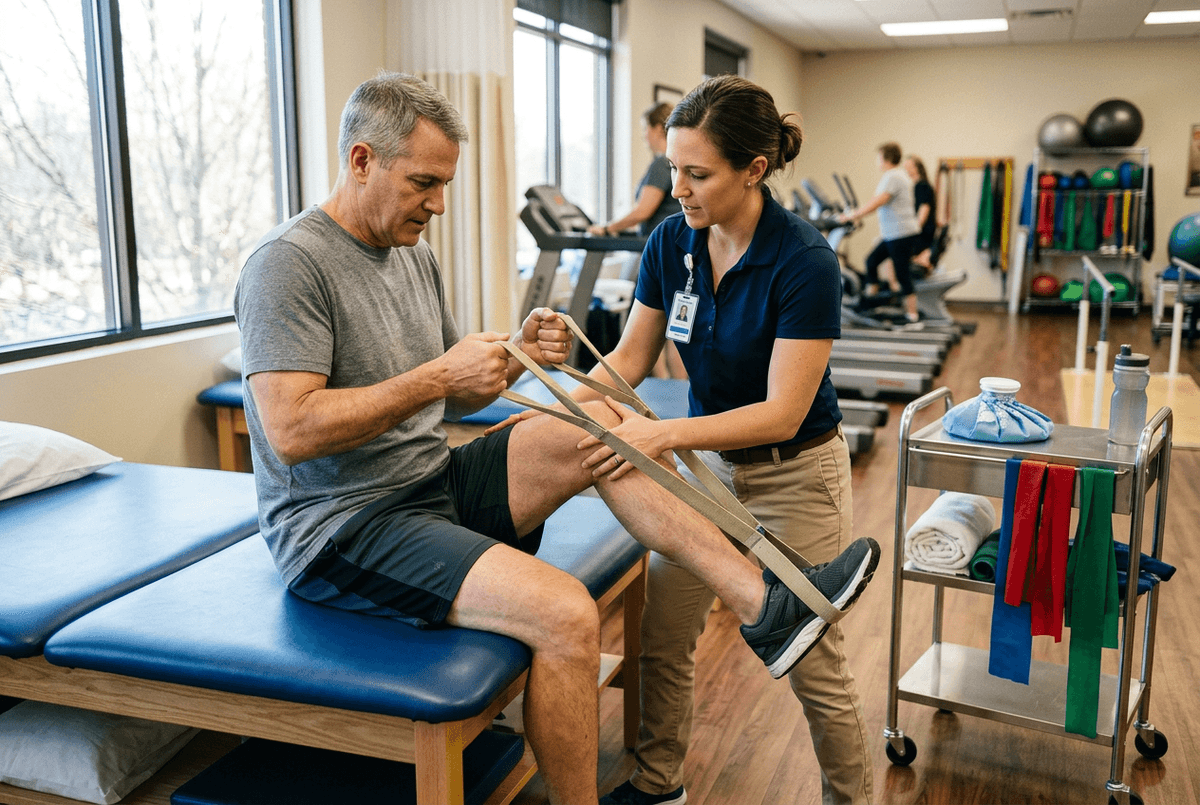
The first stretch at therapy can bring a quick, sharp “there it is” feeling—almost like the knee is arguing before it cooperates. It’s an odd kind of discomfort because it can show up even on a day when the knee seemed calmer at home.
Part of that is mechanical: rehab asks healing tissue to slide and lengthen again, and the joint is still working with extra fluid and pressure. But there’s also a protective pattern at play. After surgery—and often after months or years of limping beforehand—the nervous system can keep the muscles around the knee slightly braced. That guarding can make the movement feel tighter and more intense, because the knee is meeting resistance from both swelling and a “do not move too far” reflex.
This is why pain after a session can feel inconsistent. A small gain in bend or strength may come with a louder ache later that day, not because something was damaged, but because the system was pushed into unfamiliar range and then stays sensitized while the tissue and fluid settle back down.
The pain “timeline” is really recovery phases
It’s often the second week—or the first time you string together a few “normal” errands—when the knee suddenly feels louder again. That swing can make it seem like recovery has stalled, even though what’s changing is which part of healing is taking the lead that day.
Early on, pain is often driven by tissue irritation and fluid pressure from the surgery itself, so stiffness and throbbing can show up even with light activity. As the incision and deeper tissues start to settle, swelling may still linger and behave unpredictably with gravity and time on your feet, so afternoons can feel worse than mornings even if your walking is improving.
Then a different phase can dominate: you begin loading the knee more through therapy, stairs, and longer stands, and the sore “after” feeling becomes more tied to activity dose than to the clock. That shift can be confusing because the knee may be gaining function while still producing sharp spikes after a busy day, especially if swelling and muscle guarding haven’t fully quieted.
When reasonable actions create unexpected discomfort
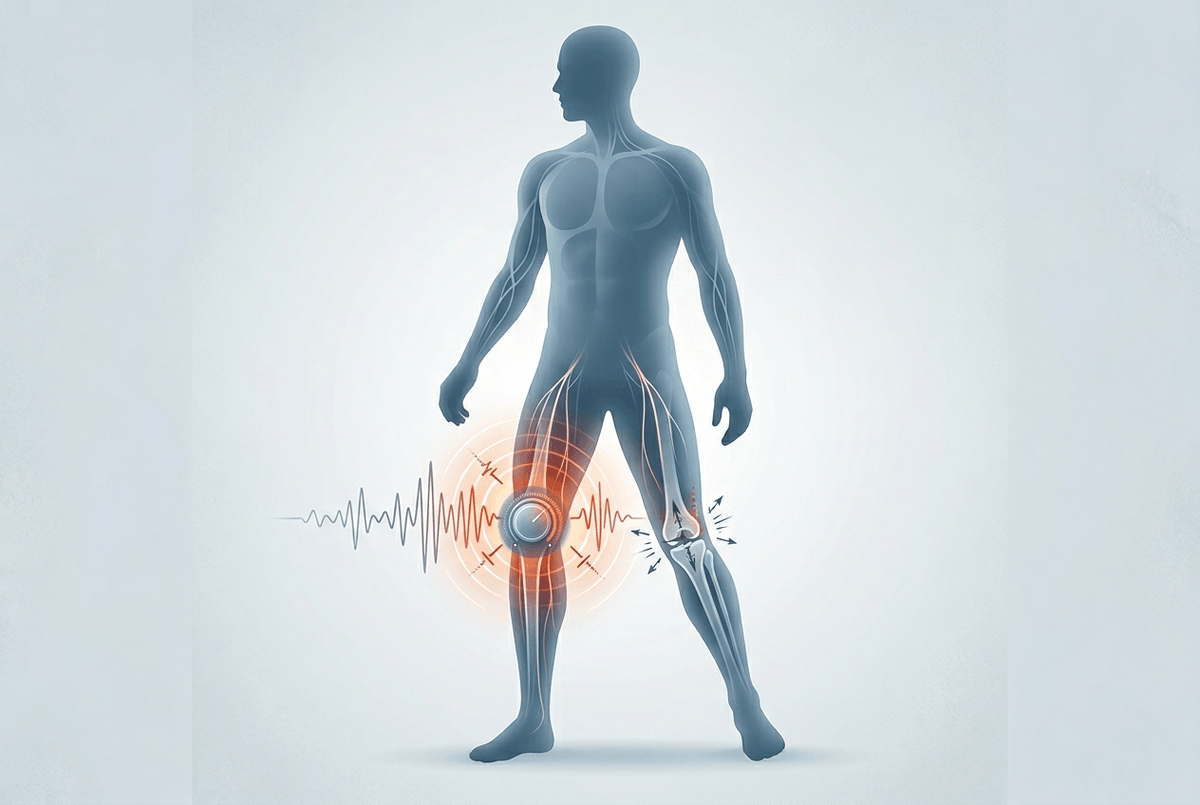
It’s often something small that sets it off: a longer shower, standing at the counter to make lunch, or taking the “normal” route to the bedroom instead of the short one. The next few hours can feel oddly punishing, and it’s easy to assume you overdid it in a way that caused damage—even when the action itself was reasonable.
In many cases, the surprise comes from timing and load, not a single wrong move. When you’re upright longer, fluid tends to settle into the knee and lower leg, raising pressure in already sensitive tissue. At the same time, the muscles around the joint may stay slightly braced to protect the new knee, which uses extra effort and can make the area feel more sore and tight afterward than the activity “should” have warranted.
Another common mismatch is when a day looks light on paper but has lots of transitions—sit-to-stand repeats, short walks, stairs, or getting in and out of a car. Those stop-and-go demands ask the knee to accept compression and bending again and again, and the nervous system may interpret that repeated signal as a need to turn the volume up. If the discomfort keeps escalating or your function drops sharply rather than rebounding, that’s usually a reason to pause and pay closer attention.
Signals that warrant a call, not just patience
Sometimes it’s not the pain level that feels different—it’s the way the knee behaves. If the area becomes increasingly red, hot to the touch, or starts to look more inflamed day by day instead of settling between flare-ups, that pattern can be worth a call. The same goes for drainage that’s new or worsening, an odor you didn’t notice before, or an incision that suddenly looks like it’s opening rather than sealing.
Another clue is a shift in function that doesn’t match your usual “12–24 hour” recovery rhythm. If you’re suddenly unable to bear weight, the knee gives out repeatedly, or your bend and straightening drop quickly and don’t return after rest, it may suggest more than ordinary swelling reactivity. In some cases, the nervous system can amplify threat signals, but progressive loss of function is harder to write off as sensitivity alone.
And while sleep-disrupting throbbing can be part of the process, severe pain that keeps escalating despite doing less—or pain paired with fever, chills, chest pain, new shortness of breath, or a rapidly swelling calf—deserves prompt medical guidance rather than waiting it out.