Midfoot pain signals that can’t be ignored
It often starts as a tight, bruised feeling across the top of the arch when you push off, then eases once you’re warmed up—easy to label as “just sore.” The detail that tends to matter is whether the foot is quietly changing how it works: a new limp, a shorter stride, or an unwillingness to roll through the midfoot even when you’re trying not to favor it.
Signals that deserve more respect are swelling that makes the top of the foot look puffy, tenderness that’s sharp in one small spot, or pain that spikes with hopping, stairs, or a single-leg calf raise. Those patterns can suggest the midfoot joints and supporting ligaments are being asked to transfer load they can’t absorb comfortably, so the area stiffens to protect itself.
If the pain is worsening day to day, showing up at rest, or making normal walking feel unreliable, that inconsistency is usually a sign the load-versus-recovery balance isn’t working yet.
What’s under the surface driving midfoot pain
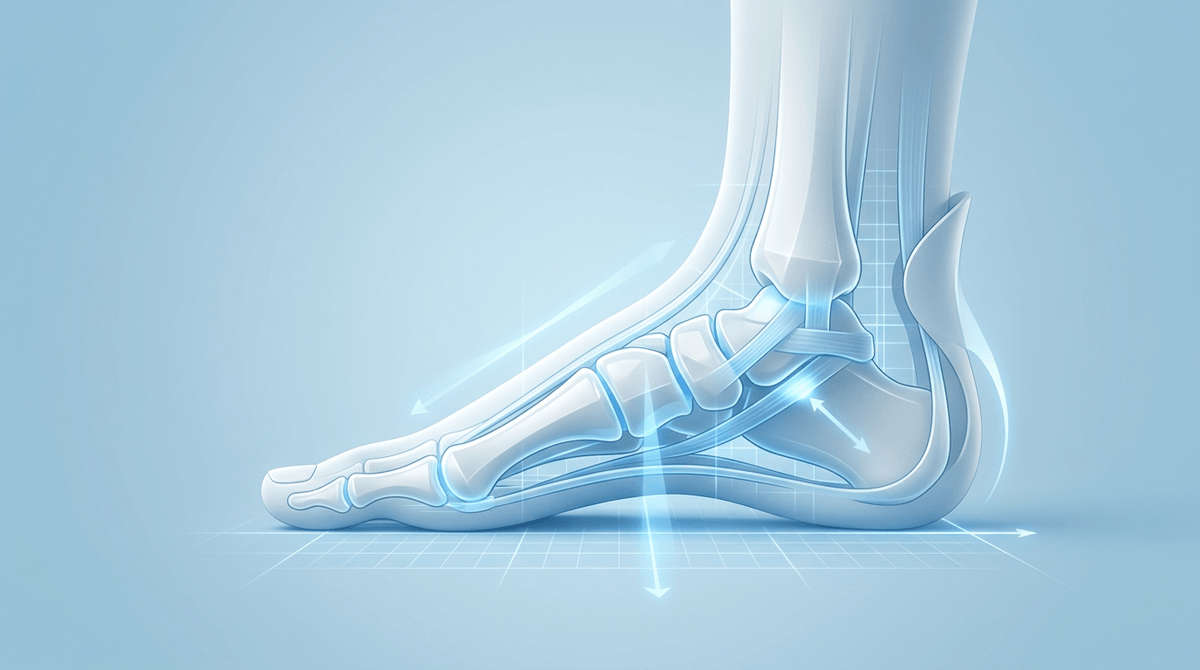
It can feel oddly “stuck” the morning after a normal day—like the arch won’t roll, even if the pain itself isn’t dramatic. That stiffness is often the clue: the midfoot is trying to limit motion through small joints that usually spread force across the arch.
When repeated loading (long shifts, hills, speed work, or a sudden change in shoes) outpaces what the tissues can tolerate, small strains may build in the joint capsules, ligaments, and tendon attachments across the top and inside of the foot. The nervous system often responds by tightening and guarding, which reduces midfoot motion. That protection can help briefly, but it also changes how force travels—pushing more load into the forefoot, the ankle, or the plantar fascia—so the original area stays reactive.
It may loosen with warmth, then flare later because the “looser” feeling leads you to load it like nothing changed. Noticing whether symptoms track with total load, surface, and support can make that pattern easier to interpret.
Injury patterns that mimic each other closely
The confusing part is how the pain can “move” by a few centimeters depending on the day—one run it feels on top of the foot, the next it’s more in the arch—and that shift can make every explanation sound plausible.
Several midfoot problems can mimic each other because they all get irritated during the same job: transferring force as you roll from heel to forefoot. A joint capsule strain across the tarsometatarsal area can feel like a sharp, local spot on the top of the foot, especially with push-off. Tendon irritation (often where tendons cross the top of the midfoot) may feel more “ropey” and reactive with repeated toe lifts or lacing pressure. Plantar fascia and deep arch tissues can feel like soreness under the arch, yet still spike when the midfoot stiffens and load gets redirected.
Because guarding changes your stride without you noticing, the pattern can look inconsistent. If swelling, bruising, or a clear “can’t trust it” feeling shows up, that’s usually worth a closer look.
When “good” self-care unexpectedly makes it worse
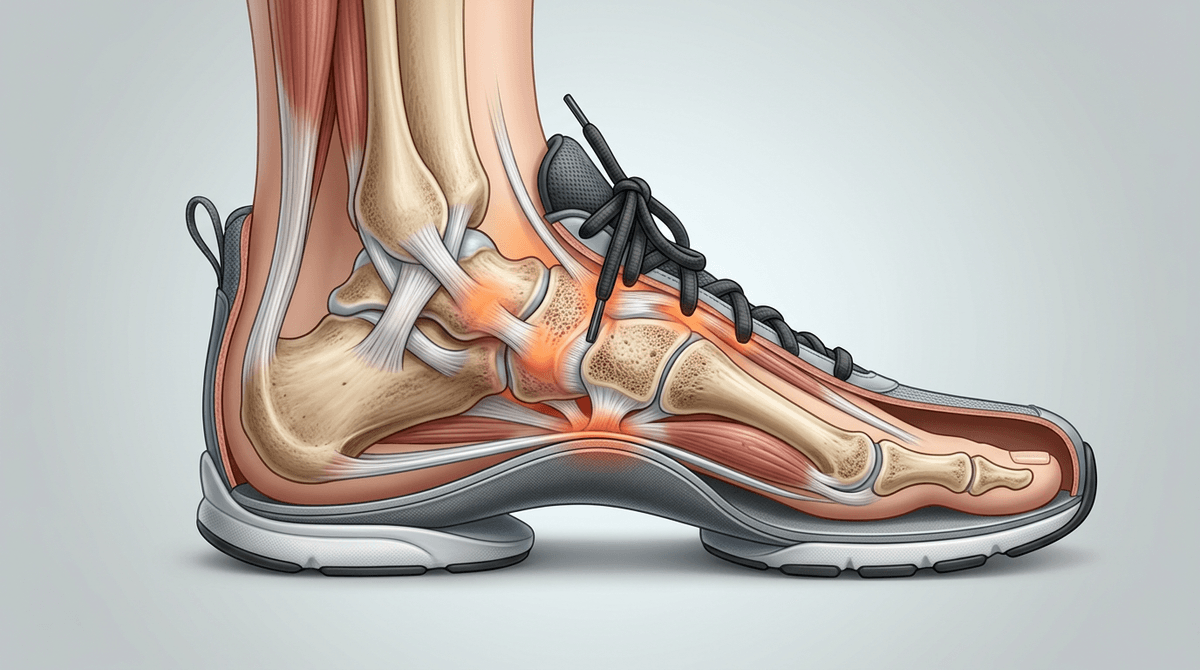
It’s frustrating when the foot feels calmer right after you “do everything right”—ice, a firmer insert, tighter laces—then aches more later that day. The flare can look like you overdid activity, but sometimes it’s the way self-care changes how force moves through the arch.
Extra stiffness can be the hidden driver. Aggressive rolling, long stretching sessions, or repeatedly “cranking” the arch into a new position may irritate already sensitive joint capsules and tendon attachments, so the nervous system responds with more guarding. Support can also backfire when it’s too rigid or suddenly higher than you’re used to, shifting pressure into a small midfoot zone instead of spreading load. That’s why the foot may feel briefly stable, then get sharper with push-off once tissues are heated up.
Relief now can increase confidence, and the next few hours end up being a bigger load than the foot was ready to tolerate.
Treatment options from simplest to most protective
You notice it most when you first stand up: the arch feels guarded, and the top of the foot feels “aware” with every step, even if it isn’t stabbing. In that moment, the simplest option is often just reducing how much the midfoot has to bend and spread force for a few days—less time on hills or stairs, fewer hard push-offs, and fewer long walks that keep it repeatedly loading in the same pattern.
When that isn’t enough, the next step is usually changing how pressure is distributed. A slightly more supportive shoe, a gentle over-the-counter insert, or skipping tight lacing over the sore area can lower peak stress on irritated joint capsules and tendon attachments. The goal isn’t “more support,” but smoother load transfer; too much rigidity can concentrate force in one tender spot, which is why inserts sometimes feel good for an hour and worse later.
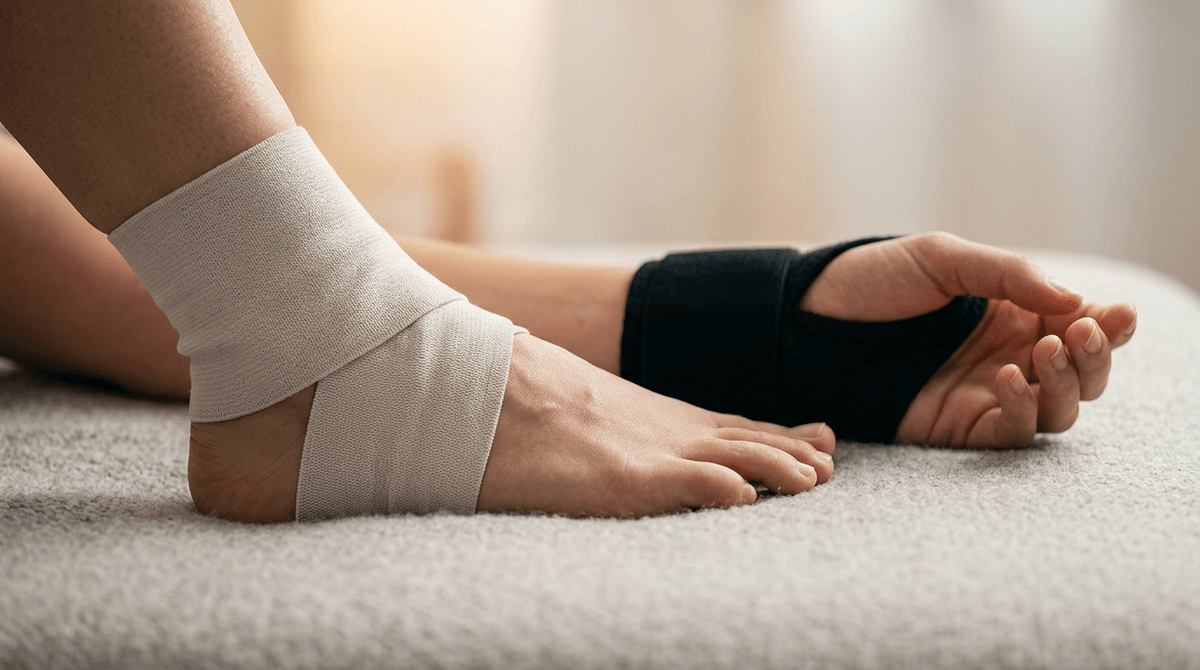
If walking still feels unreliable, more protective choices—taping, a stiffer-soled shoe, or a walking boot in some cases—may be used to limit midfoot motion while sensitivity settles. Longer protection can leave the foot stiffer and less load-tolerant, so it can feel oddly fragile when you return to normal shoes.
Exercises that restore load tolerance safely

The first sign you’re ready to reload is usually subtle: the foot doesn’t feel as “protective” on the first few steps, but it still complains if you roll through quickly. That mismatch is where exercise helps, and where it’s easy to misread a calmer morning as a green light to jump back to normal volume.
A safer starting point is often work that loads the foot without asking the midfoot to bend a lot. Isometric calf raises (holding the top position), short-foot “doming” holds, and slow heel raises done with a smaller range can build tolerance while keeping joint irritation lower. The reason these tend to be better tolerated is that they increase muscle tension through the arch and calf without as much repeated shear through the small midfoot joints that are already guarding.
If soreness is a little higher during the session but settles back to baseline by the next morning, that usually behaves like “training.” If it ramps up later that day, or you notice a new limp or avoidance of push-off, the load was likely too concentrated, even if the exercises themselves felt controlled.
Recovery pacing and red flags for evaluation
It’s often the “next morning check” that tells the truth: the foot may feel fine during a walk, then you wake up with a thicker, stiffer arch and a more cautious push-off. That delay can happen because irritated midfoot joints and tendon attachments react to cumulative load after tissues cool down, and your nervous system “turns up” guarding to limit motion it didn’t like the day before.
Pacing tends to work best when you’re watching for a repeatable baseline rather than chasing a perfect day. If symptoms settle back within 12–24 hours and your gait stays normal, that usually behaves like tolerable re-loading. If swelling is increasing, pain is sharper in one small spot, bruising appears, you can’t hop or do a single-leg calf raise without a clear spike, or walking starts to feel unreliable even on flat ground, that pattern is worth an evaluation.