Why “severe” foot deformity rarely means one thing
It can start as a dull ache along the inside of the ankle or a hot spot under the ball of the foot—yet the foot “looks” the same in the mirror. That mismatch is common, because what feels severe (pain, shoe pressure, fatigue) doesn’t always match how dramatic the shape appears, and different parts of the foot can be failing at different rates.
In some people, “severe” mostly reflects how much the foot still moves: a flexible deformity may look alarming but can still be guided back toward neutral, while a rigid one may look less extreme yet stay locked. That difference often comes from a mechanical feedback loop—tendon pull and ligament restraint become unbalanced, bones slowly shift, and body weight loads the foot unevenly.
Over time, that uneven loading can speed joint wear and soft-tissue tightening, so the same deformity label can hide very different drivers and very different limits on correction.
Correction goals clash: pain relief, balance, shoe fit
The first change people notice is often practical: the same shoes that “worked last year” suddenly rub one spot raw, even on short walks. It can feel confusing when the loudest pain is in one area, but the foot is tipping or twisting somewhere else.
That’s where goals start to compete. Offloading a tender joint or callus may mean shifting weight toward a different part of the foot, which can improve pain but make balance feel less steady. A brace or orthotic that holds the heel straighter can calm strain, yet the added bulk or altered foot angle may make toe boxes feel tighter.
Even when alignment improves on an exam table, walking adds rotating forces that can bring symptoms back in inconsistent ways. In some cases, “better shape” still doesn’t equal “better shoe fit,” because swelling, stiff toes, and pressure patterns don’t all change at the same pace.
What drives the deformity beneath the surface
Sometimes the foot feels oddly “tired” before it feels sharp—like it can’t hold you up for the last few minutes of a normal errand. That early fatigue often comes from support tissues doing more than they were built to do, even if the bones haven’t obviously shifted yet.
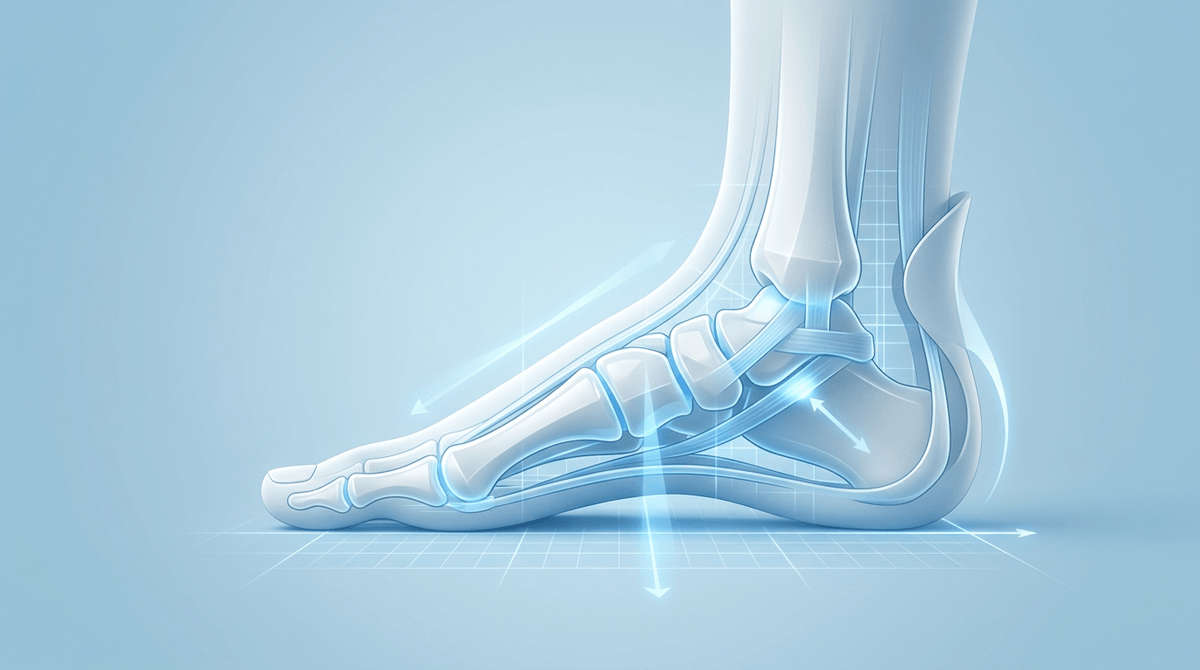
As certain tendons lose leverage or get overstretched, other tendons may start pulling the foot in a different direction to keep you stable. Ligaments that normally check motion can lengthen under repetitive load, so the heel, midfoot, or forefoot gradually drifts. The change is usually slow enough that the brain recalibrates, which is why people can misread it as “just worse shoes” or “just aging,” especially when symptoms flare inconsistently.
Once weight is repeatedly concentrated on the same joints, cartilage wear and bone remodeling can follow. At the same time, some soft tissues tighten to match the new position, making a formerly flexible foot feel increasingly rigid.
Why correction can drift back after treatment
It’s frustrating when the foot looks straighter in a brace or after a procedure, but a few weeks later the pressure point creeps back—or the toes start drifting again. That back-and-forth can make it feel like the treatment “didn’t take,” even when pain is briefly better.
One reason is that alignment isn’t held by bone position alone. If a tendon is still pulling off-axis, or a stretched ligament is still acting like an overused elastic band, the same uneven forces keep showing up with every step. Walking adds rotation and side-to-side loading that an exam table doesn’t, so small leftover imbalances can slowly reopen the same collapse or twist.
In stiffer feet, the drift can also come from the next joint over. When one segment is corrected or supported, motion and stress may shift to a neighboring joint that’s already worn, and the foot “finds” a new version of the old pattern. If swelling and muscle guarding linger, people may also unconsciously load the outside or forefoot, reinforcing the mismatch.
Nonoperative options: symptom control versus structural change

The first clue that a nonoperative plan is helping is often small: the same walk still hurts, but the pain shows up later, or the sharp edge turns into a duller ache. That can feel inconsistent, especially when the foot still looks “tilted,” and it’s easy to assume nothing structural is changing.
Most braces, orthotics, taping, and shoe modifications work by changing how force travels through the foot rather than “putting bones back.” By cupping the heel, supporting the midfoot, or stiffening a bendy segment, they may reduce tendon overload and joint compression in the spots that were taking too much load. The trade-off is that the underlying lever arms and stretched soft tissues often remain, so the foot can still drift when the device is off—or when fatigue, swelling, or uneven ground adds extra rotation.
Physical therapy and targeted strengthening can sometimes improve control in a flexible deformity, but if a joint is already stiff or arthritic, the gains may show up more as tolerance and balance than visible shape change.
Joint-sparing surgery: realignment with preserved motion
When the foot still has some give, the surgical conversation often shifts from “hold it up” to “rebuild the levers,” even though it can feel unsettling that nothing will be “fused” to lock things in place. That uncertainty is real, because the goal is correction that can tolerate walking forces while leaving joints able to move.
Joint-sparing reconstructions usually combine bone cuts (osteotomies) to reposition the heel or forefoot with soft-tissue work to rebalance pull—often tightening a stretched structure, lengthening a tight one, or changing a tendon’s line of action. The reason this helps is mechanical: changing alignment changes where body weight passes through the foot, reducing the constant overload that was stretching supports and compressing certain joints.
Because motion is preserved, small residual imbalances or early swelling-related guarding can still nudge the foot back toward its old pattern, so results may feel less “instant” than the X-ray looks.
Fusion and staged reconstruction: stability traded for stiffness
There’s a point where the foot stops “giving” under your hands and starts feeling like a single block when you try to roll through a step. That’s often when the discussion turns to fusion, even if the idea feels like a big leap—because the deformity may no longer be mostly about weak support, but about joints that have become part of the problem.
Fusion aims to remove painful motion and lock alignment by joining worn or unstable joints so they heal as one unit. Mechanically, it can interrupt the loop where malalignment concentrates load, accelerates joint wear, and tightens soft tissues into a fixed position. The trade-off is stiffness: the push-off pattern can change, uneven ground may feel less forgiving, and nearby joints can end up carrying more stress.
Staged reconstruction comes up when swelling risk, skin condition, bone quality, or the amount of correction needed makes doing everything at once less predictable. It can feel slow, but breaking it into steps may improve stability—and reduce the chance that early healing forces pull the foot back off-axis.
Outcomes that matter: function, recurrence, complications
The first “result” people notice is often not the X-ray—it’s whether a grocery-store loop feels smoother, or whether the foot stops forcing you to hunt for the one pair of shoes that doesn’t sting. That’s why function usually matters more than a perfectly straight-looking foot. Even with good correction, swelling and guarded walking can temporarily change your push-off and balance, so early weeks may feel uneven or unpredictable.
Recurrence is harder to judge in the moment. If the tendons and ligaments that drove the drift are still overpowered—or if nearby joints are already worn—the same loading pattern can slowly reassert itself, sometimes as returning callus spots or toe pressure before the shape looks different. Complications tend to show up as delays (slow bone healing, persistent swelling, nerve irritation) or trade-offs (stiffness after fusion, stress shifting to adjacent joints), and they can affect how “successful” the outcome feels in daily life.
If your day-to-day walking tolerance and shoe options are improving by months—not days—that often gives the clearest signal of where things are heading.