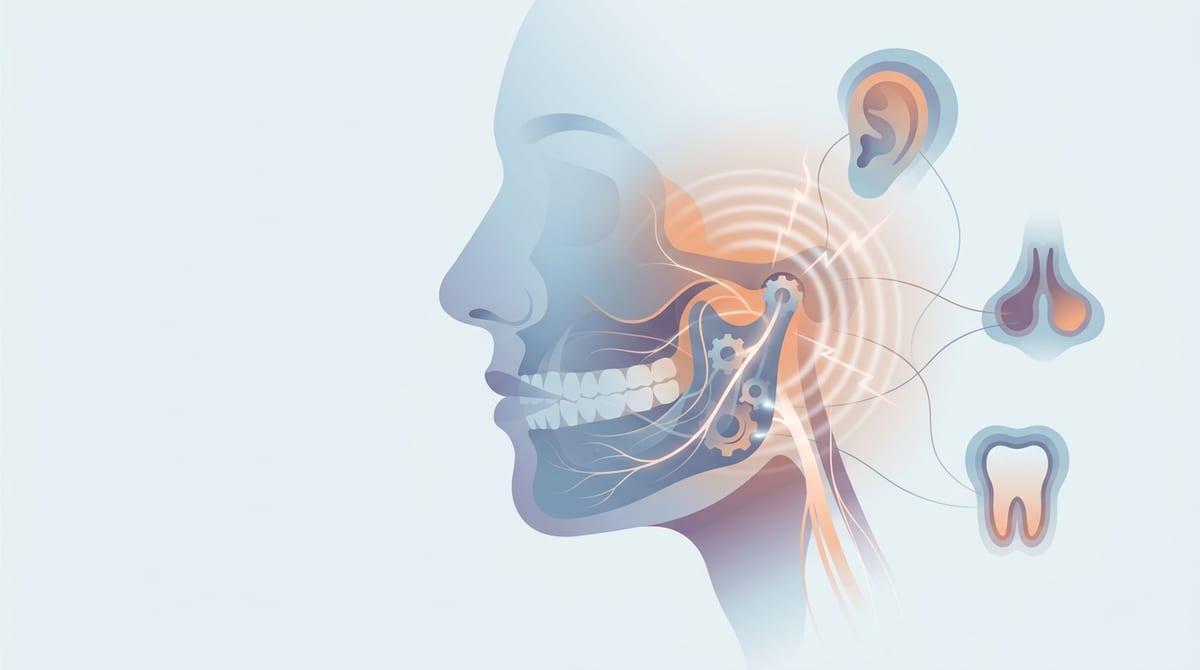
How hand pain typically shows up day-to-day
It often starts as a faint soreness you notice only after you’ve been using your hands for a while—opening jars, scrolling, holding tools, lifting a pan. The confusing part is the inconsistency: the same task can feel fine one day and sharp the next, so it’s easy to write it off as “sleeping on it wrong” or a bad grip.
Day-to-day hand pain commonly tracks with load and repetition. When tendons and their sheaths get mildly irritated, they may swell a little, and that extra thickness can make each glide less smooth. You might feel more friction during pinching or gripping, or a catchy, “stuck for a second” sensation, especially when moving quickly from a bent position to straight.
Even small swelling can also change how joints line up and how much space is available in narrow passages around the wrist and fingers. That’s why symptoms may not stay in one neat spot: discomfort can drift from a specific joint to the palm or wrist, and it may feel worse after long, uninterrupted stretches of hand use rather than in the moment.
Clues in swelling, stiffness, and weakness
You notice it when you reach for something simple: your fingers feel a little thicker than usual, and the first few movements take effort. Swelling in the hand is often subtle, but it can behave like a “volume knob”—a small increase in tissue size can create a disproportionate increase in tightness, because tendons, tendon sheaths, joints, and nerves all share limited space.
Stiffness has its own timing clues, even when the pain itself is inconsistent. If the hand feels particularly stiff after being still (overnight, a long drive, a meeting), that may reflect fluid shifting into irritated tissue while you’re not moving. If it’s more of a “gums up” feeling that builds during the day, it can fit better with repetitive friction: the more a swollen tendon has to glide, the more it may catch, click, or feel resistant.
Weakness is easy to misread as “I’m losing strength,” when it’s sometimes the nervous system dialing down force to protect a painful structure. You may notice dropping objects, a weaker pinch, or fatigue that shows up faster than it used to—especially if swelling makes motion less efficient, so each grip costs a little more effort than it should.
What drives this pattern beneath the surface
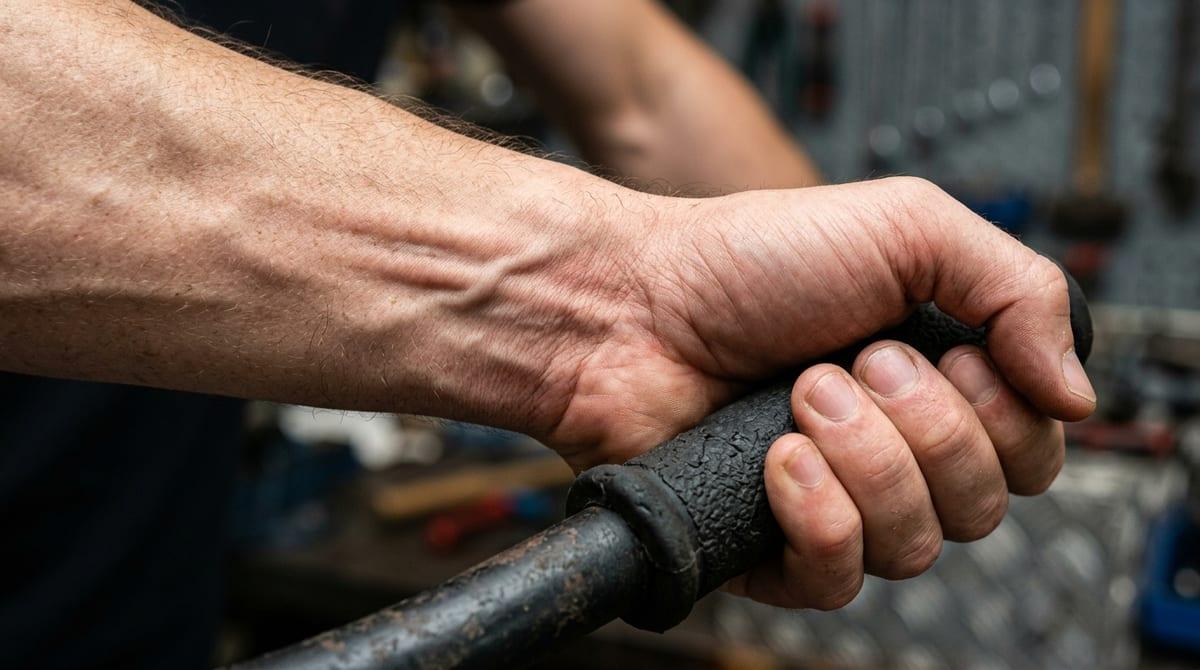
Some days it’s not the pain that stands out first—it’s how your hand “hesitates,” like the motion needs a beat to warm up. That stop-and-go quality can happen when irritated tissue subtly thickens, so structures that normally slide with a little clearance start competing for space.
With repeated gripping or pinching, tiny strain can build up in tendons and the tendon sheath that surrounds them. In response, the lining may hold onto more fluid and become slightly swollen. That swelling can increase drag, so the tendon doesn’t glide smoothly through its channel. The result may feel mechanical—catching, clicking, or a brief stuck feeling—especially when you move from a bent position to straight under load.
At the same time, swelling around joints or tendon tunnels can narrow nearby passageways where nerves travel. Nerves don’t have much slack, so even a small change in pressure can create signals that feel out of proportion to what you’re doing—tingling, buzzing, or numbness that comes and goes. Because all of this fluctuates with position, repetition, and recovery time, the pattern can feel inconsistent even when the underlying process is fairly steady.
Nerves under pressure create strange sensations
You might first notice it when your wrist is bent for a while—hands on a steering wheel, elbows on a desk, phone tilted in bed—and then a quick “pins and needles” bloom into the thumb, index, or middle finger. It can be unsettling because it doesn’t always hurt the way a sore joint hurts. It may feel like buzzing, electric flickers, or a deadened fingertip that doesn’t match how hard you were using your hand.
That mismatch is part of what makes nerve symptoms easy to misread. A nerve under pressure can fire altered signals even when the surrounding tissue isn’t severely damaged. When the space around the nerve gets tighter—often from swelling, sustained wrist position, or repetitive finger flexion—the nerve’s blood flow and insulation can be slightly stressed. In some cases, that changes how it conducts sensation, so the brain receives “noise” (tingling) or missing information (numbness) instead of a clean signal.
Symptoms may spike at night or on waking because the wrist drifts into a curled position and fluid can settle into already-irritated tissue. Or it may show up during long, uninterrupted work blocks, then fade after you shake out your hand—an inconsistent on-off cycle that can feel random, even when it’s closely tied to posture and accumulated pressure.
Joint and tendon problems feel mechanical
Sometimes the first clue is sound rather than pain: a soft click when you flex a finger, or a gritty “crunch” feeling at the base of the thumb when you twist a lid. It can feel oddly specific—like one spot in the hand isn’t tracking smoothly—yet the discomfort may still come and go enough to make you question whether it’s “real” or just fatigue.
With tendon irritation, the motion can feel like it has a hitch. A tendon that’s a little thickened, or a sheath that’s a little swollen, has less clearance to glide. Under load—pinching keys, gripping a tool, lifting a heavy mug—that reduced glide can turn into catching or brief locking, because the tendon has to force its way through a tighter tunnel instead of sliding cleanly.
Joint-driven pain often reads as a different kind of mechanical problem: soreness right at a joint line, stiffness that’s most obvious at the start of motion, and a sense that certain angles reliably “set it off.” Guarding can layer on top of it—when a joint feels unstable or irritated, you may unconsciously change how you grip, which can shift strain into neighboring tendons and make the map of pain less consistent.
When pain reflects whole-body conditions instead

Occasionally the discomfort doesn’t behave like a single hinge or tunnel getting irritated. You do the same amount of typing or gripping, but the hand aches anyway, and the “why today?” question doesn’t have a clear answer. The inconsistency can be the clue: the hand feels like it’s reacting to something larger than the hand.
In those situations, pain may track more with your whole system—sleep quality, stress load, hydration, recent illness, or a general flare of inflammation—than with one specific motion. The nervous system can also turn up sensitivity when it’s under strain, so normal hand input (pressure, vibration, even temperature) may register as more intense than you’d expect. That’s different from a tendon “catch” or a nerve-only tingling pattern, and it can make the symptoms feel widespread or oddly symmetrical.
It’s also easy to misinterpret this as weakness or “damage,” especially when multiple joints feel stiff at once. If the pattern keeps repeating—hand pain that arrives with fatigue, morning stiffness that lasts, or swelling that doesn’t match your workload—it may be worth getting checked, even if no single task clearly explains it.
Treatment options and why some backfire
The frustrating part is when you finally try to “treat it,” and the hand feels better for a day—then oddly worse. That swing can happen because different problems respond to different kinds of change: a nerve that’s being crowded may calm down with less wrist bend, while a tendon that’s thickened may flare if you suddenly ask it to do the same volume of gripping again the moment it feels slightly better.
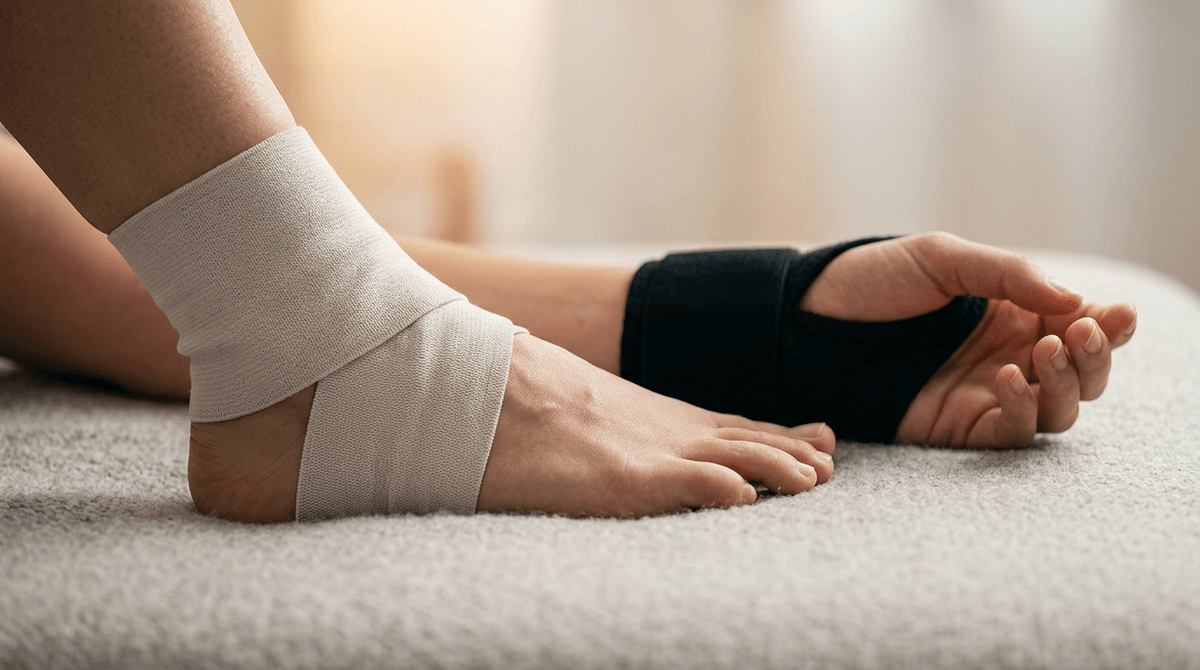
Simple supports can help or irritate depending on the mechanism. A wrist brace may reduce night tingling by keeping the wrist from curling, but it can also shift more work into the fingers and thumb during the day, which may increase clicking or soreness. Anti-inflammatory medicines or icing may take the edge off swelling, yet the relief can lead to an easy misread—“it’s fixed”—so you load the tissue past what it can currently tolerate, and the irritation returns.
Hand therapy approaches tend to work best when they match the pattern: changing how tendons glide, how joints track, or how much pressure a nerve sees. If symptoms keep escalating, or numbness and weakness are sticking around instead of cycling on and off, it’s usually a good point to get it evaluated rather than pushing through.