For many households pursuing financial independence, the mortgage is the largest line item that makes the math feel unsettled. A fixed housing payment can keep monthly spending elevated for years, yet sending extra cash to the lender can also slow investment growth and shrink emergency reserves. That tension matters more in today’s rate environment.
Recent Freddie Mac data put the average 30-year fixed mortgage at 6.46% as of April 2, 2026, high enough that the cost of carrying a loan is no longer easy to dismiss. The practical question is not whether a mortgage “counts” against FI. It is how that payment changes the spending target, the balance sheet, and the margin for error.
Start With The Right FI Question
A mortgage belongs in a financial independence calculation because it affects annual spending, not because it fits neatly into a “good debt” or “bad debt” label. The useful question is simple: what happens to the household’s required spending if the loan stays in place, runs off on schedule, or gets paid down early?
That framing changes the math. A household with $72,000 in annual spending and a $2,000 monthly mortgage payment is carrying roughly $24,000 of principal and interest in the FI budget. Remove that payment later, and the spending target changes materially. Leave it in, and the portfolio has to support it.
Housing costs also need separation. Principal and interest are temporary if the loan has an end date. Property taxes, insurance, maintenance, and HOA dues usually continue. Bundling all of it into one housing line can make a mortgage look either more permanent or less consequential than it really is.
Separate The House Into Three Buckets
A clean FI calculation works better when the home is split into three buckets instead of one broad housing number.
First is the mortgage payment tied to principal and interest. That amount belongs in annual spending until the payoff date. If principal and interest run $1,800 a month, the portfolio has to support an extra $21,600 a year while the loan is active. In a standard FI model, that difference is large enough to shift the target by hundreds of thousands of dollars.
What Equity Changes And What It Does Not
Second is home equity. It raises net worth, but it does not automatically fund living expenses. A household with $400,000 in equity and no plan to sell, downsize, rent out space, or borrow against the property cannot treat that equity like a brokerage balance. It may provide flexibility later, but it does not pay next year’s tax bill.
Third are the housing costs that survive the mortgage. Property taxes, homeowners' insurance, repairs, utilities, and HOA dues remain after the loan is gone. A paid-off house can still require $8,000 to $20,000 a year, depending on location and upkeep. FI planning gets sharper once those ongoing costs are separated from the temporary loan payment.
The Shortcut Rules That Usually Mislead

A few popular FI shortcuts create more confusion than clarity. Excluding the house entirely sounds disciplined, but it can hide the fact that a mortgage payment is still a real claim on monthly cash flow. Counting home equity the same way as index funds creates a different error. Equity may support future options, yet it is not readily spendable unless the household plans to tap it.
“Pay off the mortgage before retiring” also breaks down fast. A household with a 3% fixed loan, strong cash reserves, and large tax-advantaged accounts may be in a very different position from one carrying a 7% loan with thin liquidity. Even a low payment can mislead. Small required payments sometimes coexist with high insurance costs, rising taxes, or a loan term that extends deep into retirement.
Modeling vs Paying Off The Mortgage
A practical rule is to test the mortgage in this order: liquidity first, tax-advantaged savings second, payoff third. If extra principal payments leave the household with less than six to 12 months of core expenses in cash, the payoff case weakens quickly. If 401(k), 403(b), or IRA contributions are still below plan, directing every spare dollar to the loan can also distort the FI path by reducing long-term invested assets.
Keep the mortgage in the FI model when the rate is relatively low, the payment fits comfortably inside the spending plan, and retirement is still years away. In that case, the loan is mostly a scheduled cash-flow item.
Recent Freddie Mac data put the average 30-year fixed mortgage at 6.46% and the 15-year fixed at 5.77% for the week of April 2, 2026, a reminder that the payoff decision is highly rate-sensitive. Approximate source: Freddie Mac Primary Mortgage Market Survey.
When An Early Payoff Merits A Separate FI Scenario
Run a second scenario when the mortgage payment is large enough to noticeably change required spending. A simple trigger works well: if removing principal and interest cuts annual expenses by 10% or more, model both paths.
Do the same when retirement is expected before the scheduled payoff date, or when market volatility would feel harder to tolerate with a fixed housing payment still due every month.
Where Keeping The Mortgage Helps — And Where It Backfires
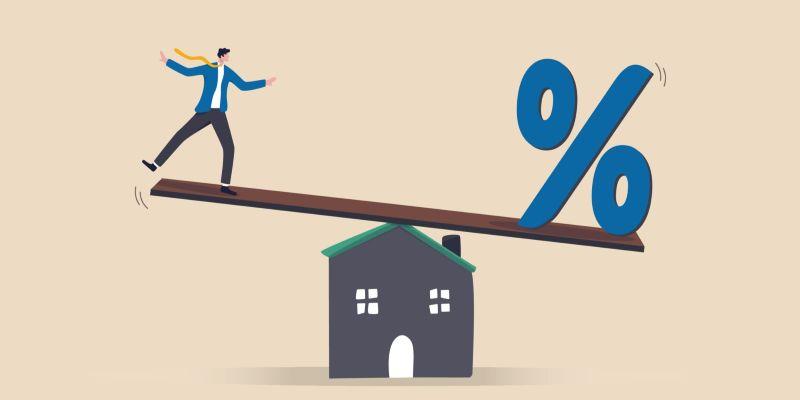
Keeping the mortgage can improve flexibility. A household that locks in a low fixed rate and keeps larger reserves may have more room to handle job loss, medical bills, or a major repair without tapping retirement accounts or selling investments at a bad time. The same logic can support FI planning when extra cash is still going into a 401(k), IRA, or taxable portfolio with a long runway.
That advantage fades when the payment stays large relative to spending. A mortgage that consumes 20% to 25% of annual expenses can leave a retiree more exposed to sequence risk, especially in the first few years of withdrawals. A market decline is harder to absorb when the largest monthly bill cannot be reduced.
Keeping the loan can also backfire when households treat invested assets as available while ignoring cash-flow strain. Strong net worth does not solve a tight monthly budget. In those cases, the mortgage may look efficient in a spreadsheet and still feel fragile in real life.
Taxes And Housing Costs That Survive The Payoff Date
Mortgage-interest tax savings are often overstated in payoff debates. The deduction matters only for households that itemize, and current IRS rules are narrower than many homeowners assume. For debt taken out after December 15, 2017, mortgage interest is generally deductible only on up to $750,000 of qualified acquisition debt, or $375,000 for married filing separately.
IRS guidance also says interest on a home equity loan or HELOC is generally deductible only when the proceeds are used to buy, build, or substantially improve the home securing the loan.
Even after the mortgage is gone, several housing costs remain. Property taxes still arrive. Homeowners' insurance still renews. Repairs, maintenance, and association dues do not disappear with the last principal payment. A payoff can lower required spending, but it does not erase the ongoing cost of owning the home.
Run The Mortgage Test Before Calling It Financial Independence
A practical order helps. First, separate principal and interest from taxes, insurance, and upkeep. Second, calculate FI twice: once with the mortgage and once without it. Third, check what an early payoff would do to cash reserves and retirement contributions. If the payment disappears soon, the current loan may be manageable.
If it extends deep into retirement or absorbs a large share of annual spending, a payoff scenario deserves serious weight. A CFP or CPA becomes especially useful when tax deductions, home equity access, or timing a home sale could change the outcome.